One education.
Three strands.
This page is the teaching itself: how a lesson becomes a habit, how mastery is judged, and how a parent sees the proof. What your child can enrol in, and in which format, is set out on Classes & Courses.
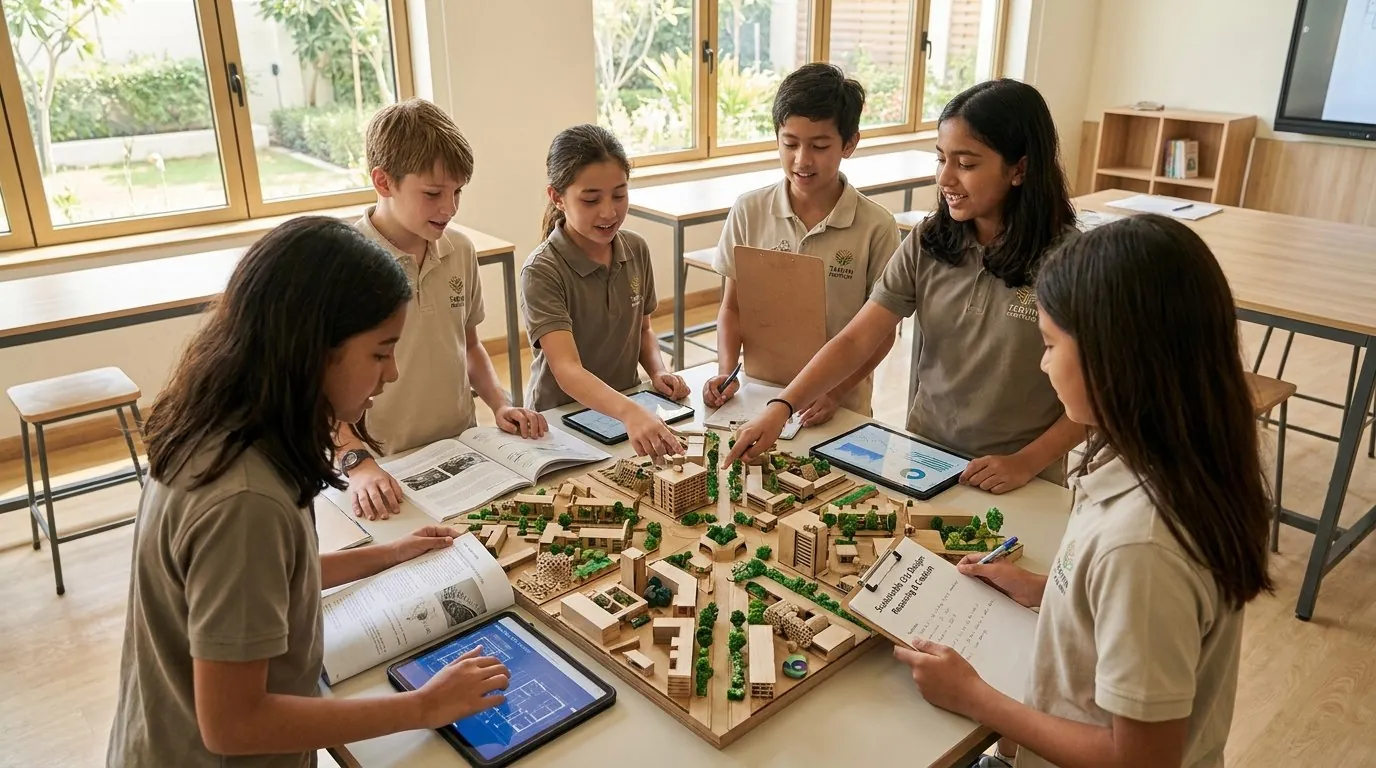
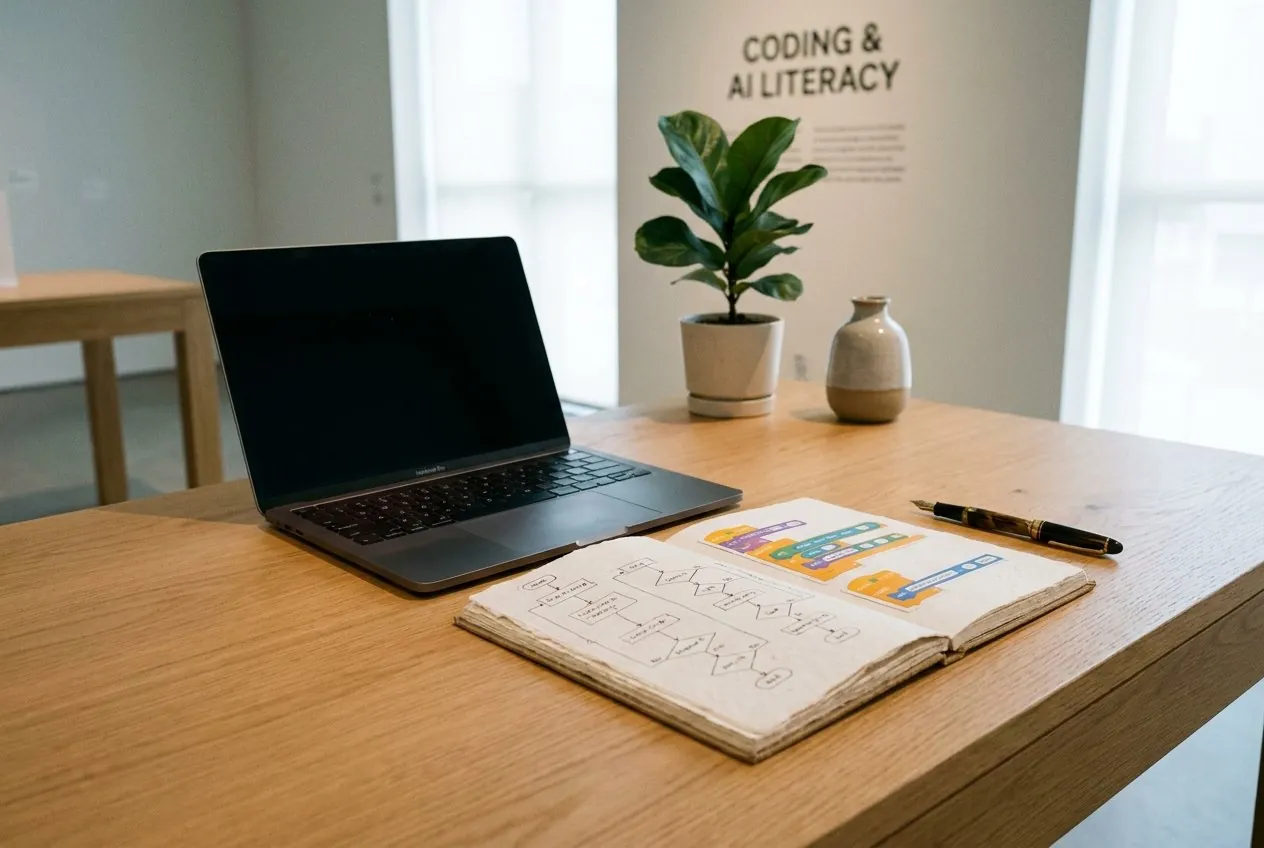
Every subject ends in work your child can show.
Writing, speaking, problem solving, coding, experiments, service missions and capstone work. Live teaching gives the structure, home practice turns it into character, and what is made becomes the record. Families take the whole of it as the Full Academy, or one part of it after school. The method does not change with the size of the timetable.
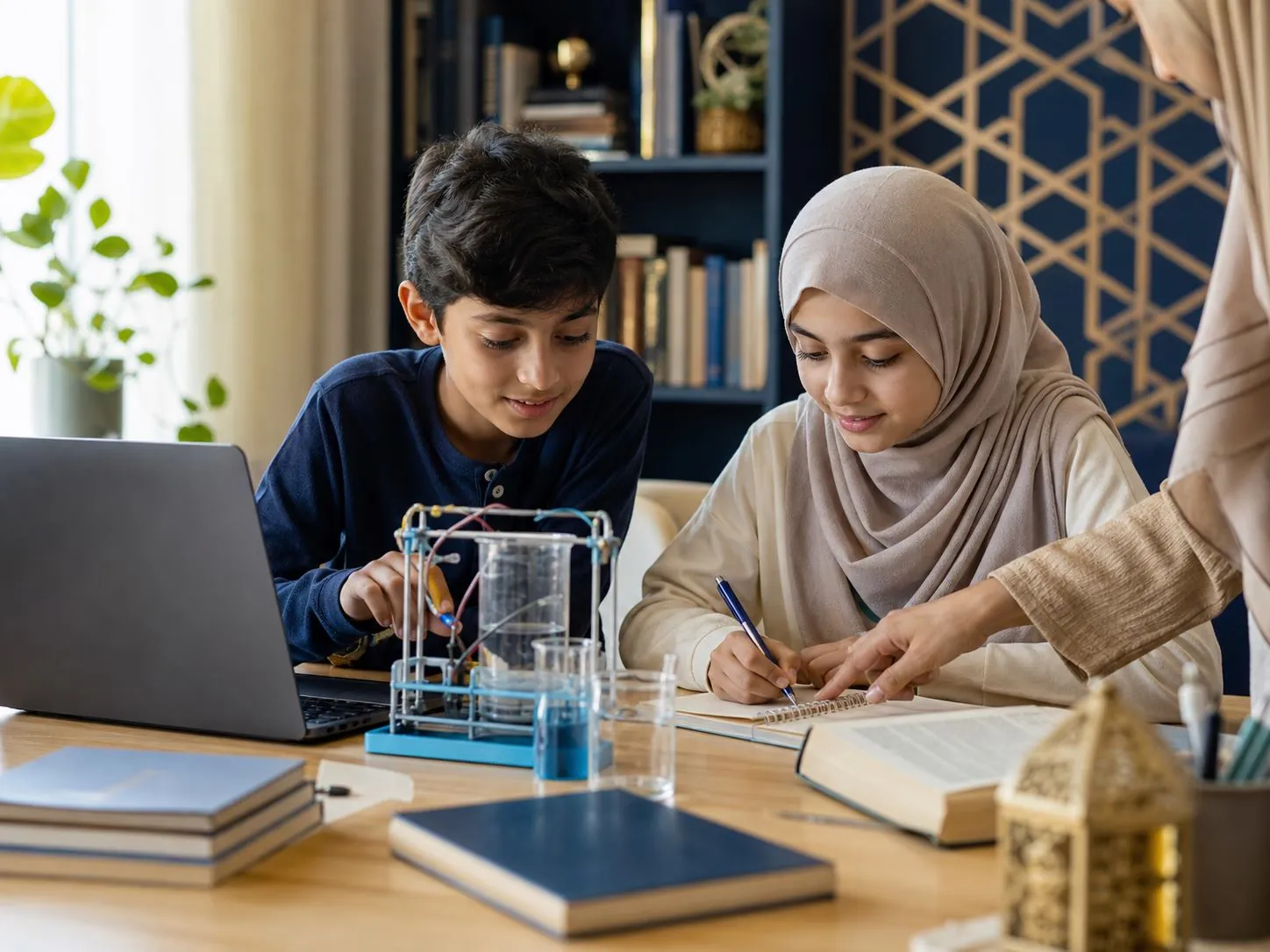
Three strands, one timetable.
A Full Academy child takes all three. An after-school child usually takes one subject out of one strand, taught exactly the same way.
Deen and identity
Qur’an, Arabic and Islamic studies are not a period at the end of the day. They set the adab of every other class, and they are the first thing a new child is placed correctly in.
- ✓Qur’an & Tajwid
- ✓Arabic
- ✓Islamic Studies
Taken further by the Qur’an Habit Intensive and the Character & Akhlaq Lab.
The academic core
Language, mathematics, science and the humanities, taught to mastery. A child moves on when the understanding is real, and the gap is named out loud rather than carried quietly into next year.
- ✓English
- ✓Urdu
- ✓Mathematics
- ✓Science
- ✓History & Geography
Taken further by Creative & Academic Writing, and by exam and board readiness classes.
Future skills and voice
Computing, reasoning and public voice. The skills that decide whether a child can explain what they know to a room, and use the tools of this century honestly.
- ✓Computing & Coding
Taken further by Public Speaking & Debate, Coding: Scratch to Python, AI Adab & Digital Safety, and Research, Reasoning & Debate.
What each subject covers, and the short courses that sit alongside them, are set out in full on Classes & Courses.
Five things hold every week together.
These are not features. They are the conditions under which a child is actually taught rather than merely enrolled.
Live cohort teaching
Small live classes with an anchor teacher who knows every child by name and notices when one goes quiet.
Mastery progression
Skill by skill, with a visible mastery map. A gap is named out loud and worked on, not carried silently into next year.
Work that is made
Every subject produces something: a project, a recording, a piece of writing, a build. Understanding has to leave a trace.
Parents as partners
Weekly home missions are verified by parents, which is what turns a lesson attended into a habit kept.
Mentors from the field
Visiting mentors, engineers, doctors, huffaz and people who built something, widen what a child believes is available to them.
A week your family can actually live.
Every subject moves through the same five movements each week, whether your child takes eight subjects or one. Live time is short and focused; the learning continues at home, away from screens.
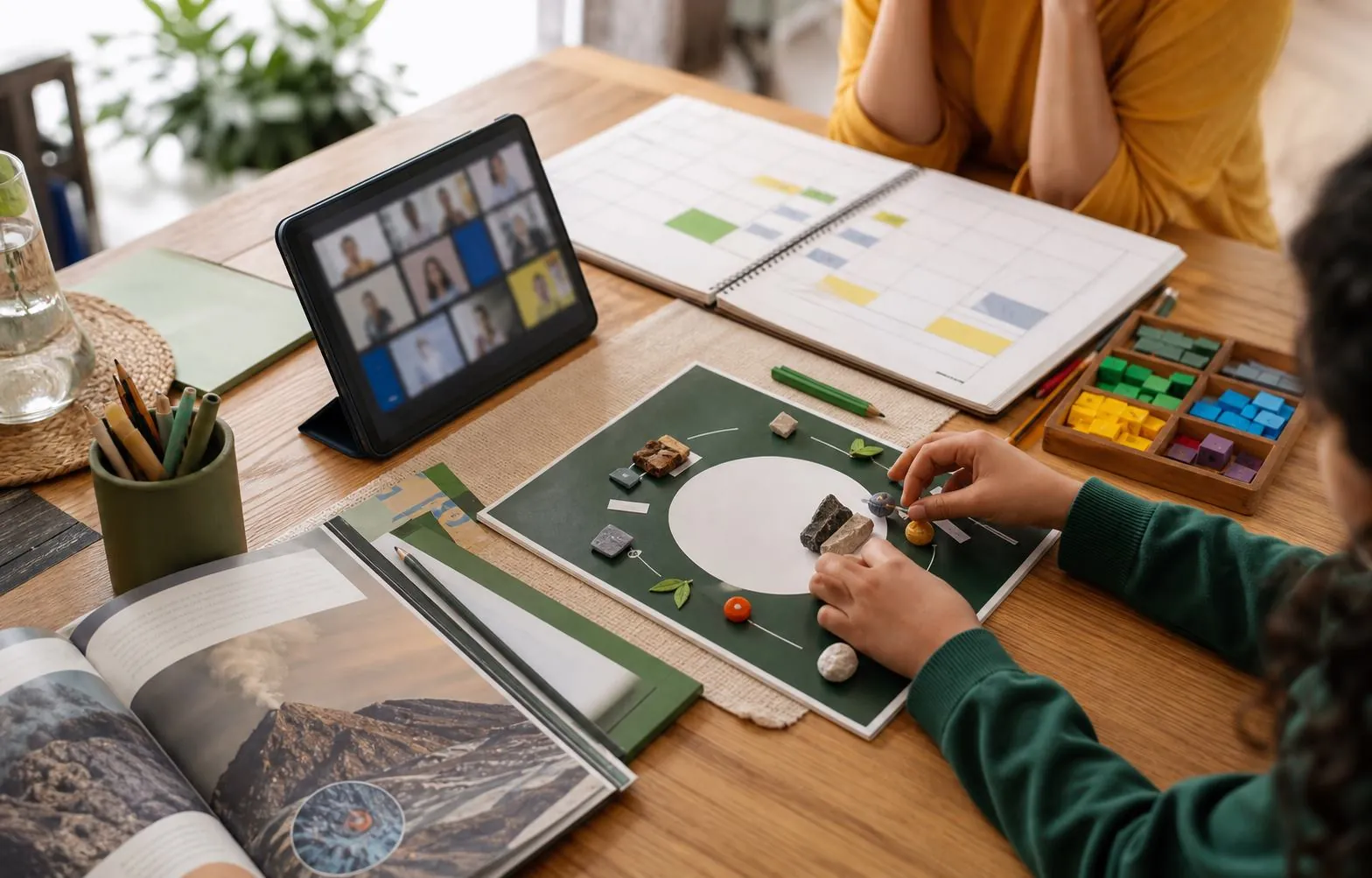
Your exact days and times are set at orientation, before you commit to anything. Cohorts run on Pakistan evenings with overseas-friendly slots, and one-to-one classes are timetabled around your child.
The right challenge at the right season.
A child is placed by what they can do, not only by the year they were born in. Placement is reviewed with you after the first weeks.
Foundations & wonder
- ✓Phonics and early reading
- ✓Number sense through doing
- ✓Du‘a, stories and gentle routine
- ✓Short, focused live sessions
Confidence & structure
- ✓Reading fluency and expressive writing
- ✓Mental mathematics strength
- ✓First presentations and first builds
- ✓Home missions done with parents
Reasoning & creation
- ✓Research tasks and debate
- ✓Real coding projects
- ✓Science investigations written up
- ✓Leading a showcase
Readiness & leadership
- ✓Board and Cambridge readiness habits
- ✓Capstone portfolio project
- ✓Advanced writing and speaking
- ✓Mentorship and future pathways
Four things we will not do to your child.
A method is defined as much by what it refuses. These are the refusals parents ask us about most, answered before you have to ask.
We do not race the Qur’an
Recitation is built as a daily habit with correct makhraj. A child who recites a little well every day is ahead of one pushed through a page a week.
We do not pass a child forward on a date
Mastery decides movement, not the calendar. Where a child is behind, we say so to the parent in writing and we teach the gap.
We do not grade a child into a number
A report that says 74% tells a parent almost nothing. Ours says what was learned, what was made, what improved and what needs support.
We do not teach through a screen all day
Live sessions are short and capped, roughly 35 to 60 minutes by grade band. The rest of the learning happens off screen, at home, with real materials.
Proof, not promises.
Whichever track your child is on, the teaching produces the same four things for you to inspect.
- A Portfolio Passport of work your child made, said, wrote or built, kept term by term and carried forward.
- A monthly parent report in plain language: learned, made, presented, practised, improved, needs support, one next step.
- A named anchor teacher who owns your child's progress and writes those notes against real work, not impressions.
- Home missions you verify yourself, so you always know what was practised and what was skipped.